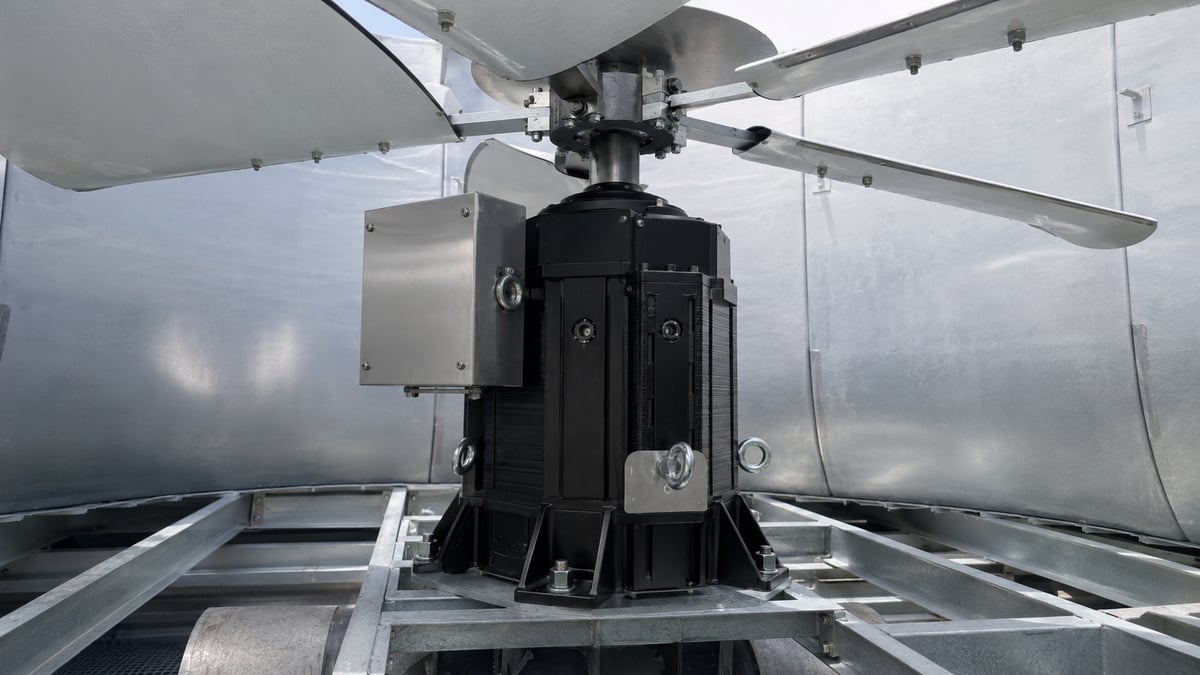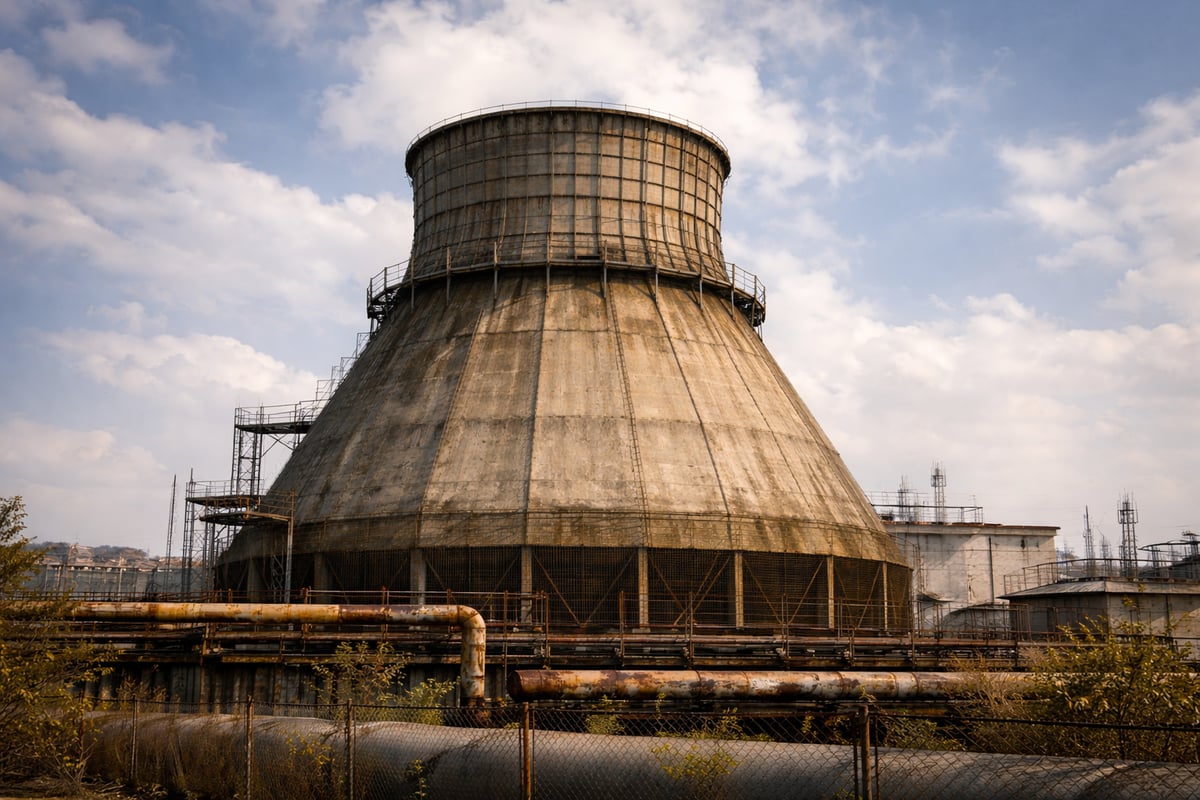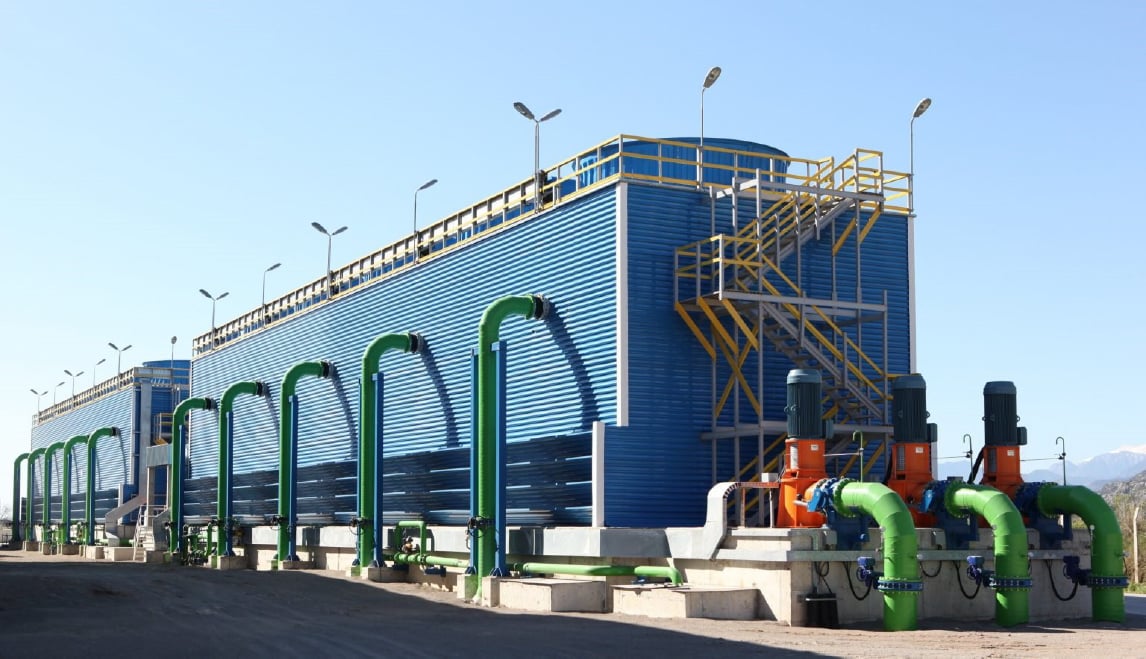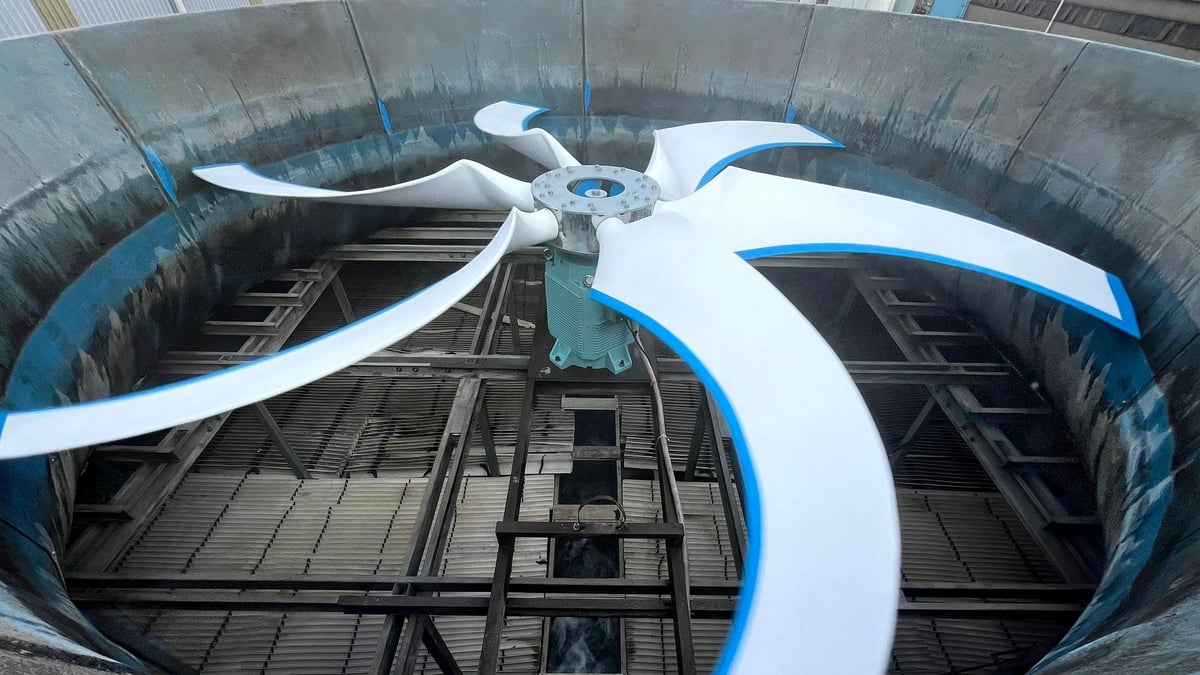
A cooling tower motor typically operates more than 10,000 hours per year.
It runs outdoors, under high humidity, water spray, and continuous thermal cycling.
In such conditions, motor selection directly affects reliability, maintenance requirements, and energy consumption. Yet in many installations, motors are still specified as standard components — leading to avoidable failures and energy losses.
In practice, most failures are not random. They are the result of a few recurring specification issues.
Why Cooling Tower Motors Fail
Field experience across HVAC and process cooling systems highlights four common causes:
- Inadequate IP protection: Motors exposed to water spray without sufficient sealing allow moisture ingress. This leads to insulation degradation and internal corrosion over time.
- Low insulation class: Cooling tower motors operate under continuous load with seasonal temperature variation. Class B insulation often lacks sufficient thermal margin. Class F or H improves long-term reliability.
- Undersizing: Motors operating continuously near rated load experience elevated thermal stress, reducing both efficiency and service life.
- Bearing exposure to condensation: Temperature fluctuations cause internal moisture cycles (“thermal breathing”), degrading lubrication and accelerating bearing wear.
IP Ratings for Cooling Tower Applications
Ingress Protection (IP) ratings define resistance to dust and water (IEC 60529).
For cooling tower environments:
- IP55 → minimum for outdoor use
- IP56 → recommended where direct water spray is present
Lower protection classes, particularly open designs, are not suitable for humid and spray-exposed conditions.
Motor Enclosures
The enclosure design determines how the motor interacts with its environment:
- TEFC (Totally Enclosed Fan Cooled) Standard solution; no air exchange with ambient environment
- TEAO (Air Over) Suitable only when installed directly in airflow
- ODP (Open Drip Proof) Not suitable for cooling tower conditions
In most cases, TEFC with appropriate IP rating provides the most robust configuration.
Efficiency Classes and Operating Cost
Motor efficiency has a direct impact on long-term energy consumption.
According to IEC standards:
- IE2 → still common, but not optimal for continuous duty
- IE3 → current baseline in many regions
- IE4 → high efficiency, typically using advanced motor technologies
- IE5 → ultra-premium efficiency, typically achieved with permanent magnet or synchronous reluctance designs
For a continuously operating motor, even small efficiency differences accumulate.
Example:
A 55 kW motor running year-round can save ~6.000 – 6.800 kWh/year when moving from IE2 to IE3.
Higher efficiency classes (IE4–IE5) can provide additional savings, particularly in applications with long operating hours.
Over the motor’s lifetime, energy cost typically exceeds purchase cost many times over. For this reason, efficiency class selection should be considered a lifecycle decision, not just a capital cost decision.
Cooling Tower Motor Sizing
Motor sizing must reflect actual operating conditions, not only nominal values.
A simplified approach:

Key considerations:
- Accurate fan efficiency assumptions
- Seasonal load variation
- Continuous duty safety margin
Undersizing leads to overheating. Oversizing reduces efficiency at partial load.
Fixed Speed vs VFD Operation
Cooling demand varies with ambient conditions. Fixed-speed operation cannot adapt to these changes.
Variable Frequency Drives (VFDs) enable:
- Speed adjustment based on demand
- Reduced energy consumption at partial load
In many systems, VFD operation can reduce energy use by 30–50% during off-peak conditions.
Motors used with VFDs should be designed for inverter duty (IEC 60034-25).
Thermal Class Selection
Ambient conditions define insulation requirements:
- Class F (155°C) → standard outdoor installations
- Class H (180°C) → high ambient or high-duty environments
Higher insulation classes provide additional thermal margin and extend service life.
Bearing Considerations
Bearings are a primary failure point in cooling tower motors.
The main driver is internal condensation caused by thermal cycling.
Design considerations include:
- Sealed vs re-greasable bearings
- Corrosion resistance
- Thrust load capability for vertical shafts
In vertical cooling tower fans, proper thrust bearing design is critical.
Installation and Maintenance
Typical best practices include:
- Correct mounting configuration (B3, B5, V1)
- Annual inspection of insulation resistance and vibration
- Periodic bearing checks
A common benchmark:
- Insulation resistance < 1 MΩ (500V test)
→ indicates need for maintenance or rewinding
System-Level Consideration
Motor performance should be evaluated together with the overall drive system.
In some installations, replacing gearbox-driven systems with direct drive configurations has resulted in:
- Reduced mechanical losses
- Lower vibration levels
- Elimination of lubrication requirements
For example, one industrial application reported a reduction in power consumption from 75 kW to 33.6 kW while maintaining airflow performance.
Conclusion
Cooling tower motor selection is a multi-parameter engineering decision.
Key factors include:
- IP protection
- Insulation class
- Efficiency class
- Correct sizing
- Bearing design
When these parameters are aligned with operating conditions, motors can achieve long service life with stable performance.
Conversely, specification errors — particularly in protection and sizing — often lead to premature failure and increased operating cost.
For technical support on cooling tower motor selection, sizing, or system evaluation, contact the EMF Motor engineering team at info@emfmotor.com or visit the contact page.