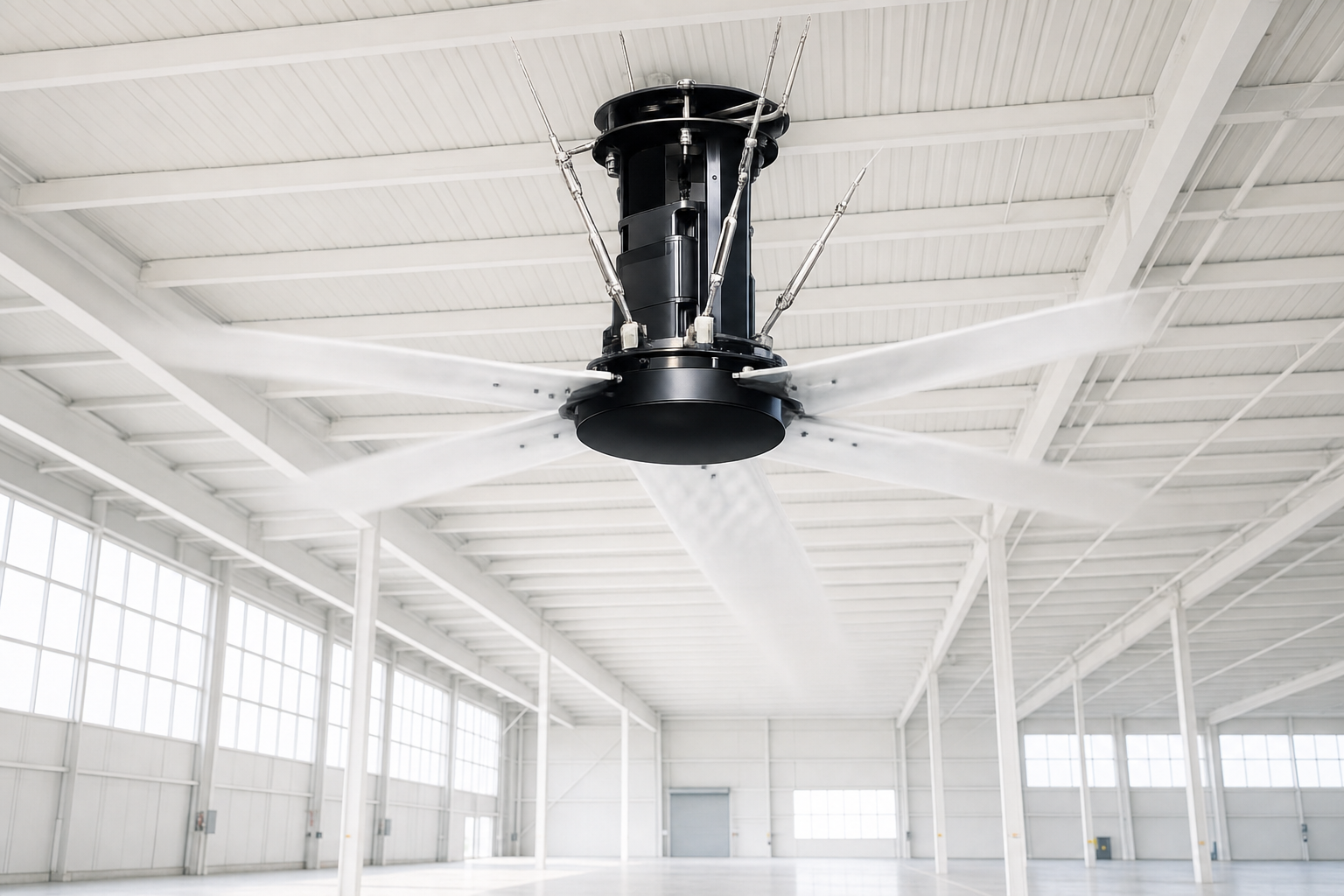
Modern bir HVLS (High Volume Low Speed) fan üç sayıyla değerlendirilir: ne kadar hava hareket ettirdiği, ne kadar güç çektiği ve bakım için ne sıklıkla bir platforma çıkılması gerektiği. Bu üç sayıyı da belirleyen tek tasarım kararı, fanın bir redüktöre sahip olup olmadığı — ya da kanatları döndüren bir direct drive HVLS fan motorunun bulunup bulunmadığıdır. Bu makalenin tamamı bu ayrımı ele alır.
Direct drive HVLS fanlar, fan göbeğine doğrudan bağlanmış sabit mıknatıslı bir motor kullanır. Redüktör yoktur. Kayış yoktur. Daha az hareketli parça, daha az ısı, daha az gürültü ve yıllarla ölçülen bir bakım aralığı — aylarla değil.
ABD'de bir dağıtım merkezindeki tesis müdürü için de, Stuttgart'ta bir tesis mühendisi için de, Chennai'de bir teknik şartname alıcısı için de, Singapur'da bir liman operasyon lideri için de bu denge aynı görünür. Bina büyüktür, tavan yüksektir, fanlar yıllarca çalışır ve her kilovat-saat ile her servis çağrısı kâr-zarar tablosunda karşınıza çıkar. Bu yazı, direct drive'ın motor seviyesinde gerçekte neyi değiştirdiğini ve bir EMF Motor HVLS platformunun bu resme nerede oturduğunu ele alır.
Direct drive'ın çözdüğü problem
Geleneksel HVLS fanlar, güç aktarım sistemlerini sıradan indüksiyon makinelerinden ödünç alır: 900–1.500 RPM'de dönen yüksek hızlı bir motor, dik açılı bir redüktör üzerinden kanatların gerçekte gerek duyduğu 10–60 RPM'e düşürülür. Bu sistem çalışır. Ancak sıcak bir tavan boşluğunda sürekli çalışan bir dişli redüktörden beklenebilecek her problemi de beraberinde getirir.
Redüktör, arıza noktasıdır. Dişli yağı oksitlenir. Contalar sızdırır. 40–50°C'lik bir tavan bölgesinde sürekli rejimde çalışırken viskozite kayar ve aşınma hızlanır. Bu servis çağrılarının her biri bir platform, bir teknisyen ve fanda duruş süresi gerektirir.
Direct drive tüm bu zinciri ortadan kaldırır. Yağlanacak hiçbir şey yoktur. Hizalanacak hiçbir şey yoktur. Motor rotoru ile fan göbeği arasında değiştirilecek hiçbir şey yoktur.
Redüktörlü HVLS fan
- Motor + dik açılı redüktör + kaplin
- Belirli aralıklarla dişli yağı değişimi
- Dişli takımı üzerinden aktarma kayıpları
- Tavan bölgesinde işitilebilir redüktör uğultusu
- Sürekli çalışma ve yüksek ortam sıcaklığında arızaya yatkınlık
EMF direct drive HVLS motor
- Fan göbeğine cıvatalanan sabit mıknatıslı motor
- Yağ yok, dişli aşınması yok, kaplin yok
- Düşük RPM'de %92'ye kadar motor verimi
- 40 dB'nin altında — mağaza ortamı sessizliği
- 50°C ortam sıcaklığında sürekli çalışma için tasarlandı
Motorda “direct drive” gerçekte ne anlama gelir
Bir EMF HVLS motoru, yüksek kutup sayısına sahip sabit mıknatıslı senkron bir makinedir. Bu yapı, motorun hızı torka çevirmek için bir redüktöre gerek kalmadan 10–60 RPM aralığında sürekli tork üretmesini sağlar. Bu dönüşümü mıknatıslar gerçekleştirir.
Rotor, redüktör giriş hızında değil fan hızında döndüğü için sürücünün anahtarlama yapması gereken frekans düşüktür, demir kayıpları düşük kalır ve motor serin kalır. Sensörsüz kontrolle birleştiğinde (tozlu, yüksek titreşimli tavan ortamında enkoder bulunmaz), sonuç gerçek anlamda kur-ve-unut nitelikte bir sürücü ve motor paketidir.
Burada egzotik hiçbir şey yok. Direct drive PM motorlar, EMF'nin sarım gerginlik kontrolü için tork motorlarında ve dişlisiz soğutma kulesi fanlarında kullandığı aynı mimaridir. Bir HVLS fanda öncelikler değişir — çok düşük hız, büyük çaplı aerodinamik yük, on yıllarca sürecek sürekli çalışma — ancak dişlisiz gitmenin altında yatan neden aynıdır. Yük yolundaki daha az bileşen, kayabilecek, aşınabilecek veya arızalanabilecek daha az şey anlamına gelir.
Binayı takip eden hız kontrolü
HVLS fan iki hızlı bir cihaz değildir. Doluluk gün boyunca değişir, rampa kapıları açılır, forkliftler koridorları ısıtır ve öğleden sonra güneşi tavan hizasında ısıyı biriktirir. Direct drive motor, entegre bir servo kontrolcü ile eşleştirilir ve bu kontrolcü fan hızını 10–80 RPM aralığında sürekli olarak, sıcaklık, doluluk veya bir bina yönetim sistemi sinyaline göre ayarlar.
Sürücü, düşük eylemsizlikli doğrudan bağlantılı bir yükü çalıştırdığından — redüktör yok, uzun şaft yok — hız değişimleri yumuşak ve neredeyse sessizdir. Aşırı gerilim, aşırı akım ve termal korumalar kontrolcüye entegre edilmiştir; böylece bir gerilim düşüşü veya durmuş bir fan, yanık bir sargıya dönüşmez. Pratikte, gerçek bir tesis programında "kur ve unut" yaklaşımı tam olarak bu şekilde işler: bölge başına bir BMS etiketi, bir set noktası, manuel müdahale gerekmez.
Önemli olan sayılar
Tek bir 7,3 metrelik direct drive HVLS fan, 0,8–1,5 kW çekerken 800–1.500 m²'lik bir zemin alanını kapsayabilir. Bu, bir ofis espresso makinesinin gücüyle çalışan tek bir motorun, 10–20 geleneksel yüksek hızlı ayaklı veya sütunlu fanın işini yapması demektir.
Durup üzerinde düşünülmesi gereken orta rakamdır. Sıcak bir tavan bölgesinde sürekli çalışan açılı bir solucan veya konik dişli redüktör, kademe sayısına ve yağlayıcı durumuna bağlı olarak mil gücünün %15–25'ini sürtünme ve ısıya kaptırır. Direct drive bu kayıp kategorisini tamamen ortadan kaldırır — bu bir pazarlama rakamı değil, bir mekanizmadır.
Genellikle doğrudan fan faturasından daha önemli olan iki ikincil etki vardır. Yazın, cilt üzerindeki düşük hızlı hava hareketi algılanan sıcaklığı değiştirir — ASHRAE Standard 55'in resmileştirdiği yükseltilmiş hava hızı soğutma etkisidir. EMF HVLS Motor ürün sayfasına göre, kullanıcılar aynı hava sıcaklığında 8°C'ye kadar daha serin hissedebilir; bu da tesis yöneticilerinin şikayet almadan termostat ayar noktasını yükseltmesine olanak tanır. Kışın ise aynı fan düşük RPM'de ters yönde çalıştırıldığında tavanda hapsolan sıcak havayı katmanlarından ayırıp aşağı iter — aynı EMF ürün spesifikasyonuna göre, yüksek tavanlı mekanlarda ısıtma yüklerini %30'a kadar azaltır.
Bu tasarrufların hiçbiri bir fan spesifikasyon sayfasında görünmez. Bunlar HVAC faturasında görünür.
Bir bakışta EMF HVLS motor
| Parametre | EMF HVLS Motor |
|---|---|
| Mimari | Sabit mıknatıslı senkron, direct drive |
| Uyumlu fan çapı | 3 – 7,3 m |
| Çalışma hızı | 10 – 80 RPM |
| Motor verimi | %92'ye kadar |
| Ortam sıcaklığı sınıfı | 50°C'ye kadar |
| Besleme voltajı | 220 – 400 V (tek motor platformu) |
| Kontrol | Sensörsüz PM — enkodersiz |
| Gürültü | 40 dB'nin altında |
| Redüktör / kayış | Yok |
| Servis ömrü | 20+ yıl kesintisiz |
Yukarıdaki her değer, ürün sayfasından veya /tr/products/hvls-motor adresindeki HVLS Motor Kataloğu'ndan alınmıştır.
220–400 V aralığı küçük bir ayrıntı değildir. Detroit, Duisburg, Coimbatore veya Tuas'taki yerel şebekede çalışan tek bir motor SKU'su, fan OEM'i için stoklama baş ağrısını ve son kullanıcı elektrik tasarımcısı için şartname baş ağrısını ortadan kaldırır. Tek motor ailesi, tek yedek parça, tek kablolama şeması.
Direct drive HVLS fanların yerini bulduğu alanlar
Bina farklı olsa bile alıcı profili pazarlar genelinde dikkat çekici derecede tutarlıdır.
ABD dağıtım merkezleri ve 3PL depoları. 12–15 m tavan yükseklikleri, bölge başına binlerce metrekare, odanın kullanılan alt üçte birine hizmet vermekte zorlanan HVAC. Bir direct drive HVLS fan grid'i, istiflenmiş sıcak havayı dağıtır ve HVAC'ın daha dar bir aralıkta çalışmasını sağlar. Redüktörsüz motor burada önemlidir çünkü günde iki vardiya çalışan 12–40 fanlık bir filo, 20 yıl boyunca çok sayıda dişli yağı değişimi anlamına gelir.
Alman üretim tesisleri. Alıcı önceliği ölçülebilir verim ve temiz dokümantasyondur. Belirtilmiş bir verim değeri, belirtilmiş bir ortam sıcaklığı sınıfı ve sarf malzemesi gerektirmeyen bir motor, bir Werksleitung'a savunulması daha kolay ve bir ISO 50001 enerji yönetimi raporuna işlenmesi daha kolaydır.
Hint fabrikaları ve lojistik parkları. Yaz aylarında sürekli 40–45°C tavan sıcaklıkları ve her zaman iyi huylu olmayan şebeke elektriği. 220–400 V geniş voltaj platformuna sahip, 50°C ortam sıcaklığına göre değerlendirilmiş bir motor, sadece kağıt üzerinde değil gerçekten kullanılabilir durumdadır. Düşük gürültü seviyesi, bitişik ofisleri olan karma kullanımlı bloklarda fanı uygulanabilir kılmaya devam eder.
Singapur limanları, depolama alanları ve MRT depoları.Sürekli çalışma, yüksek nem, konut bölgelerine yakın sıkı gürültü düzenlemeleri. Dişlisiz mimari, konvansiyonel HVLS fanları ele veren akustik izi ortadan kaldırır.
Farklı pazarlar, direct drive seçmek için aynı neden: motor, fanın hiç uyumayan parçasıdır ve redüktörlerden tasarruf ettiğiniz her şey binanın tüm ömrü boyunca birikir.
Mühendislerin genelde sorduğu sorular
Direct drive bir HVLS motoru gerçekten hiç bakım gerektirmiyor mu?
Aslında evet. Redüktör olmaması, değiştirilecek yağ ve aşınacak dişli olmaması anlamına gelir. Önerilen servis, periyodik görsel kontrol ve dış yüzey temizliğidir; sızdırmaz rulmanlar ve fırçasız sabit mıknatıslı yapı, olağan arıza noktalarını ortadan kaldırır. Tipik servis ömrü, 20 yılın üzerinde sürekli çalışmayı kapsar.
Motoru fan çapına göre nasıl boyutlandırırım?
EMF HVLS motorları, 10–80 RPM çalışma aralığında 3 ile 7,3 m arasındaki fan çaplarını kapsar. Boyutlandırma; fan kanadı geometrisi, tasarım hızındaki hedef CFM ve ortam çalışma profiline göre belirlenir — bunları bize iletin, size uygun motoru belirleyelim.
45–50°C'lik bir tavan bölgesinde gün boyu çalışabilir mi?
Evet. Motor, 50°C ortam sıcaklığına kadar sürekli çalışma için değerlendirilmiştir; bu da Hindistan yazlarının, Orta Doğu depolarının ve dünyanın herhangi bir yerindeki iklimlendirilmemiş metal kaplı hangarların tasarım koşuludur.
Bir encoder veya geri besleme cihazına gerek var mı?
Hayır. Motor, sensörsüz PM kontrolü için optimize edilmiştir — sürücü, rotor konumunu motor terminal sinyallerinden takip eder. Bu da titreşimin yoğun olduğu bir montaj konumundan hassas bir bileşeni ortadan kaldırır.
Tek bir motor SKU'su 220 V ve 400 V tesisleri kapsayabilir mi?
Evet. Geniş voltaj platformu (220–400 V), aynı motorun voltaj bazlı bir varyant gerektirmeden ABD, AB, Hindistan ve Güneydoğu Asya pazarlarına gönderilebilmesi anlamına gelir.
EMF Motor uygulama mühendisliği tarafından yanıtlandı.
İlgili konu: soğutma kuleleri
HVLS fanlar düşük hızda direct drive için bir vaka çalışmasıysa, redüktörsüz soğutma kulesi motorları daha zorlu hava koşullarında düşük hızda direct drive için bir vaka çalışmasıdır. Mühendislik argümanı aynıdır — sıcak, nemli bir ortamda 7/24 çalışan bir fandan redüktörü kaldırın ve bakım kalemi ortadan kalkar. Zaten bir HVLS retrofiti değerlendiren herhangi bir tesis ekibi için göz atmaya değer; geri ödeme mantığı aynı binada, bir kat yukarıda geçerlidir.
Önemli çıkarım
Direct drive HVLS fanlar; redüktörü, kayışı ve servis merdivenini sabit mıknatıslı bir motorla değiştirir. Enerji tasarrufu, düşük gürültü seviyesi ve 20+ yıllık servis ömrünün tamamı buradan gelir.
Binanız için bir direct drive HVLS fan mı boyutlandırıyorsunuz?
Fan çapını, tavan yüksekliğini, ortam sıcaklığını ve çalışma döngüsünü bize bildirin. Motoru boyutlandırıp kataloğu göndereceğiz.
Teklif isteyin