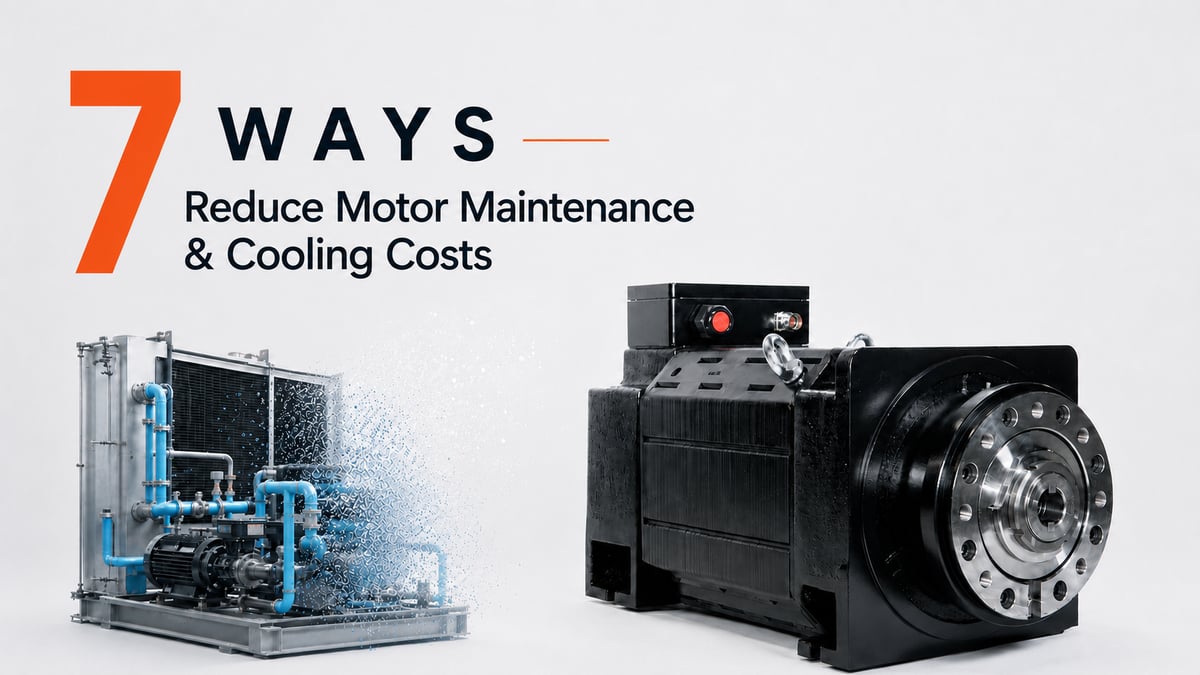
Ya endüstriyel motorunuzun su soğutmaya ihtiyacı olmasaydı? Elektrik motoru bakımı yalnızca motorun kendisiyle sınırlı değildir. Su soğutmalı bir motor ayrıca pompalar, filtreler, borular, ısı eşanjörleri, valfler, sensörler ve su arıtma ekipmanı gerektirebilir. Her ek bileşen enerji tüketir, dikkat gerektirir ve olası başka bir arıza noktası oluşturur.
Redüktörlü bir tahrik sistemi ise yağlama, hizalama, kaplinler ve mekanik aşınma dahil olmak üzere daha da fazla bakım noktası ekler.
Peki ya uygulama harici bir su soğutma devresi veya redüktör olmadan çalışabilseydi?
Doğal soğutmalı direct drive tork motorları tüm tahrik sistemini basitleştirebilir. İşte bu yaklaşımın bakım gereksinimlerini, yardımcı enerji tüketimini ve yaşam döngüsü maliyetlerini azaltabileceği yedi yol.
1. Soğutma Pompalarını ve Chillerları Ortadan Kaldırın
Su soğutmalı motorlar, soğutma suyunu dolaştırmak ve kontrol etmek için harici bir sisteme ihtiyaç duyar. Kuruluma bağlı olarak bu sistem şunları içerebilir:
- Sirkülasyon pompaları
- Chillerlar veya ısı eşanjörleri
- Filtreler ve valfler
- Borular ve bağlantı elemanları
- Sıcaklık ve akış sensörleri
- Kaçak tespit ekipmanı
- Su arıtma sistemleri
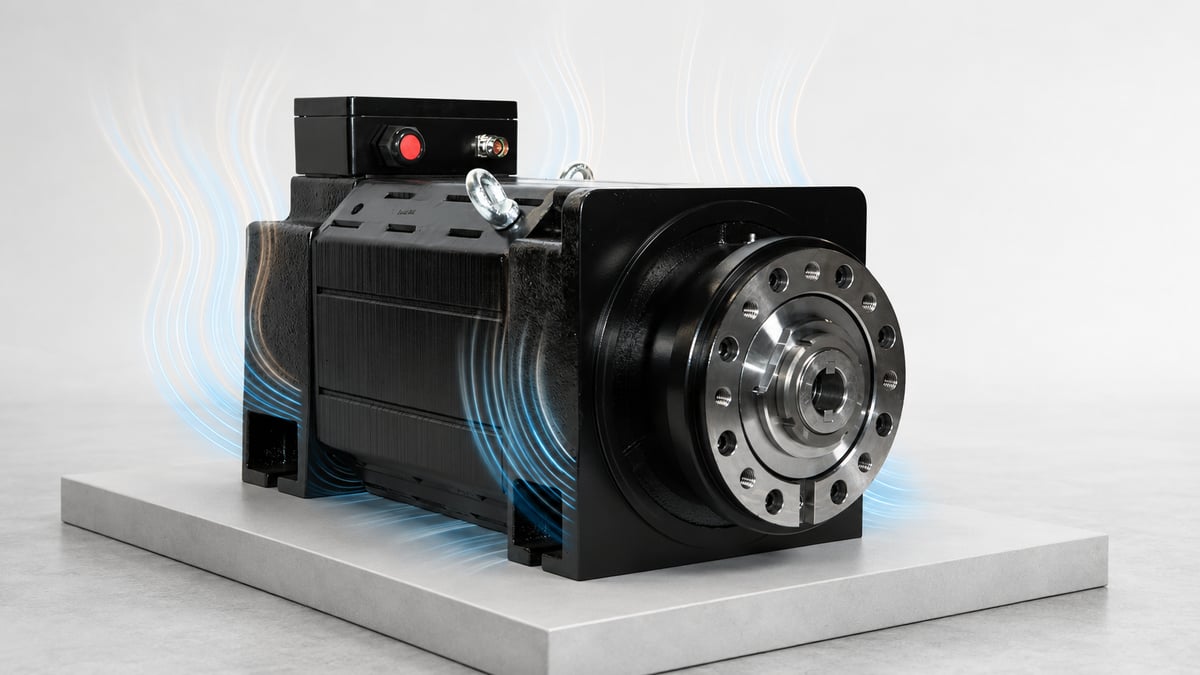
Bu bileşenler, tüketimleri motor etiketinde görünmese bile yardımcı enerji tüketir.
Doğal soğutmalı bir motor, harici bir su soğutma devresine gerek kalmadan ısıyı gövdesi üzerinden dağıtır. Bu devrenin kaldırılması hem sistem karmaşıklığını hem de soğutmayla ilgili elektrik tüketimini azaltabilir.
Bu nedenle önemli soru yalnızca "Motor ne kadar verimli?" değildir. Soru şudur: "Komple motor sistemi ne kadar verimli?"
2. Su Arıtma Gereksinimlerini Ortadan Kaldırın
Bir su soğutma devresi uygun su kalitesine bağımlıdır. Düşük su kalitesi, kireçlenmeye, korozyona, biyolojik büyümeye ve kısıtlı akışa yol açabilir. Bu nedenle operatörlerin motorun servis ömrü boyunca soğutma suyunu izlemesi ve arıtması gerekebilir.
Bu şunları içerebilir:
- Su kalitesi kontrolleri
- Kimyasal arıtma
- Filtre temizliği ve değişimi
- Kireç ve korozyon kontrolü
- Periyodik yıkama
- Akış hızı izleme
Doğal soğutmalı bir motor bu soğutma suyu gereksinimlerini ortadan kaldırır. Bu, rutin bakımı ve temiz proses suyuna bağımlılığı azaltır -- su ve kaynak verimliliği hedefleri güden tesisler için giderek daha önemli hale gelen bir husus.
3. Filtreleri, Boruları ve Kaçak Risklerini Azaltın
Bir soğutma devresi ne kadar çok bileşen içerirse, bakım ekibinin incelemesi gereken bağlantı sayısı da o kadar artar. Borular, contalar, bağlantı elemanları, valfler ve filtreler tıkanabilir, hasar görebilir veya aşınabilir. Nispeten küçük bir kaçak bile soğutma performansını etkileyebilir, güvenlik endişeleri yaratabilir veya beklenmedik bir üretim kesintisine neden olabilir.
Harici soğutma devresinin ortadan kaldırılması bu bileşenleri motor sisteminden çıkarır.
Bu, motorun hiçbir zaman kontrol edilmemesi gerektiği anlamına gelmez. Bakım ekibinin izlemesi, temizlemesi ve değiştirmesi gereken daha az yardımcı bileşen olduğu anlamına gelir.
4. Redüktör Bakımını Ortadan Kaldırın
Birçok düşük hızlı, yüksek torklu uygulamada, konvansiyonel bir yüksek hızlı motor, gereken çalışma hızına ve torka ulaşmak için bir redüktör gerektirir. Redüktör aşağıdakiler dahil ek bakım gereksinimleri getirir:
- Yağlama
- Yağ seviyesi ve yağ kalitesi kontrolleri
- Conta muayenesi
- Dişli ve rulman izleme
- Hizalama kontrolleri
- Titreşim izleme
- Periyodik bileşen değişimi
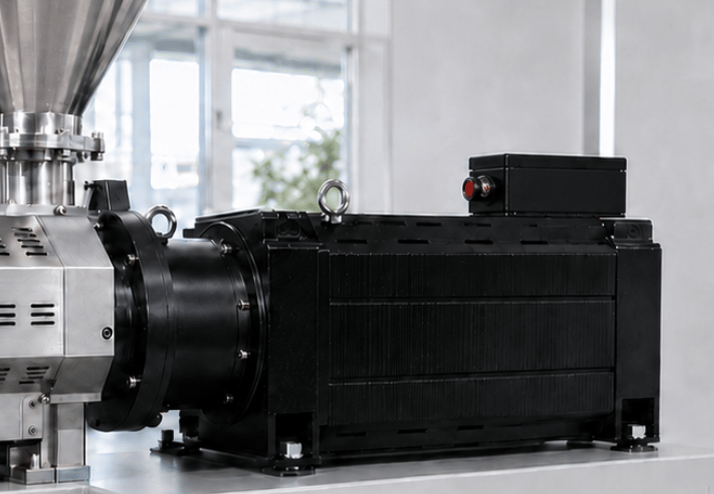
Bir direct drive tork motoru, gereken torku çalışma hızında üretir ve doğrudan tahrik edilen makineye bağlanır.
Uygulamanın izin verdiği durumlarda bu, redüktörü -- ve buna bağlı enerji kayıplarını, aşınan bileşenleri ve bakım işlerini -- ortadan kaldırır.
5. Hizalama ve Yağlama İşlerini Azaltın
Konvansiyonel bir tahrik sistemi bir motor, kaplin, redüktör, kayış, kasnak veya ek bir aktarma mili içerebilir. Her mekanik arayüz başka bir hizalama gereksinimi ve olası aşınma noktası ekler. Hatalı hizalama, titreşimi, rulman yüklerini, ısı üretimini ve mekanik gerilimi artırabilir.
Bir direct drive sistemi, motoru doğrudan yüke bağlayarak güç aktarım yolunu kısaltır. Makine tasarımına bağlı olarak bu, şunları ortadan kaldırabilir:
- Redüktörler
- Kaplinler
- Kayışlar ve kasnaklar
- Ek miller
- Redüktör yağlaması
- Tekrarlanan hizalama işleri
Daha az mekanik arayüz, incelenecek, ayarlanacak, yağlanacak ve değiştirilecek daha az bileşen anlamına gelir.
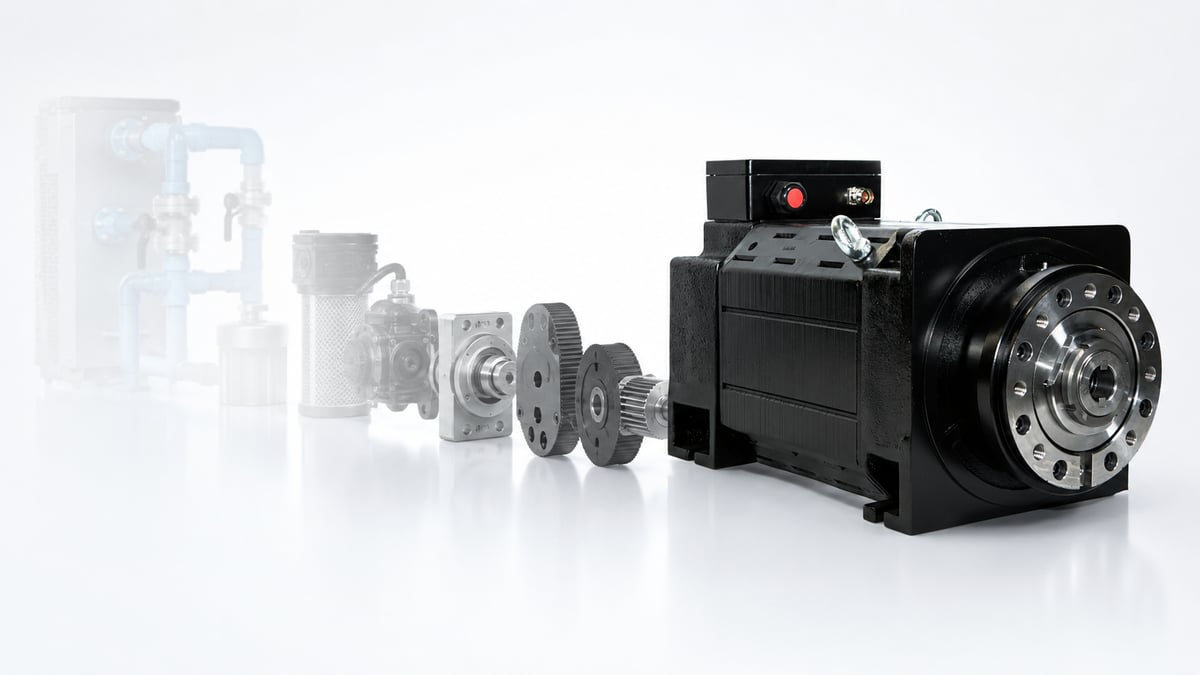
6. Yardımcı Enerji Tüketimini Azaltın
Motor verim değerleri genellikle motorun kendisini tanımlar -- tüm sistemin çalışması için gereken her bileşeni değil. Daha doğru bir enerji değerlendirmesi şunları da dikkate almalıdır:
- Soğutma pompası tüketimi
- Chiller veya ısı eşanjörü ihtiyacı
- Redüktör kayıpları
- Kayış ve kaplin kayıpları
- Ek havalandırma gereksinimleri
- Kötü hizalamadan kaynaklanan enerji kayıpları
- Aşırı motor sıcaklığının neden olduğu artan direnç
Sıcaklık yönetimi özellikle önemlidir. Daha yüksek sargı sıcaklıkları elektriksel direnci artırır ve izolasyonun yaşlanmasına katkıda bulunur.
ABD Enerji Bakanlığı, etkili bir motor yönetim programının parçası olarak motor sıcaklığının, yükün, güç kalitesinin ve tahrik sisteminin durumunun değerlendirilmesini önermektedir.
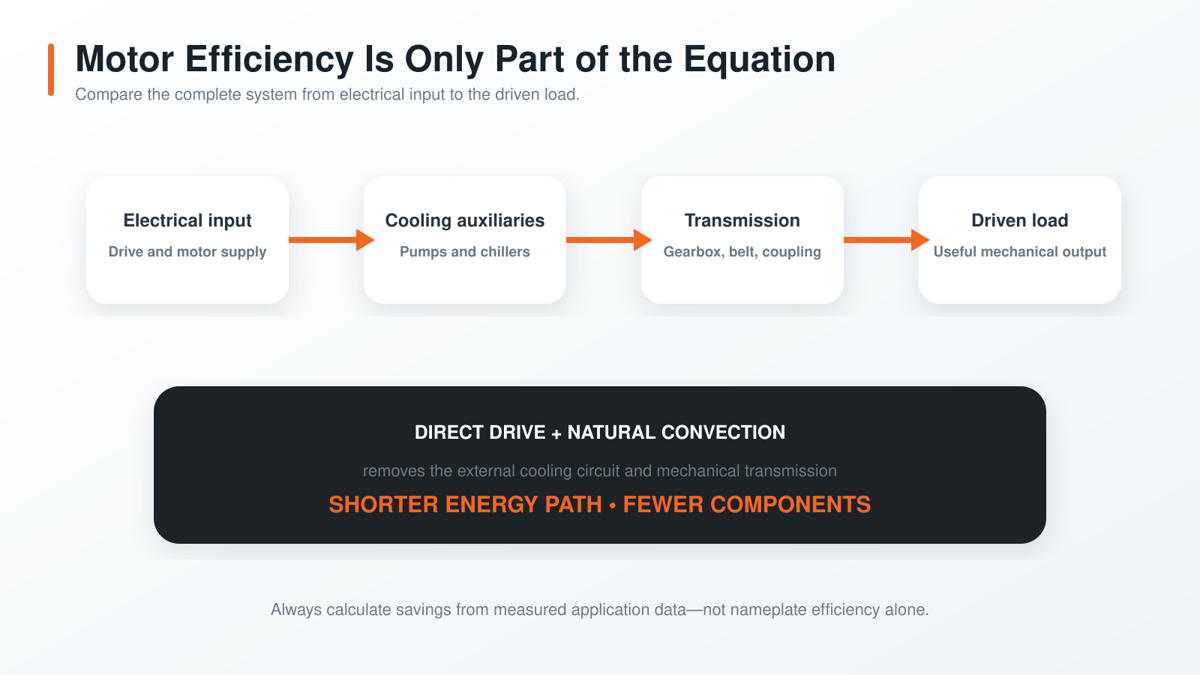
Gereksiz soğutma ve aktarma bileşenlerinin ortadan kaldırılması, bu nedenle verimi motor etiketinde belirtilen değerin ötesinde artırabilir.
7. Toplam Sahip Olma Maliyetini Azaltın
Bir motorun satın alma fiyatı, ömür boyu maliyetinin yalnızca bir parçasını temsil eder. Eksiksiz bir karşılaştırma şunları içermelidir:
- Motor ve sürücü satın alma fiyatı
- Soğutma sistemi ekipmanı
- Soğutmayla ilgili elektrik tüketimi
- Redüktör ve aktarma kayıpları
- Su ve kimyasal tüketimi
- Yağlayıcılar ve yedek parçalar
- Bakım işçiliği
- Planlı bakım duruşları
- Plansız duruş süreleri
- Beklenen ekipman ömrü
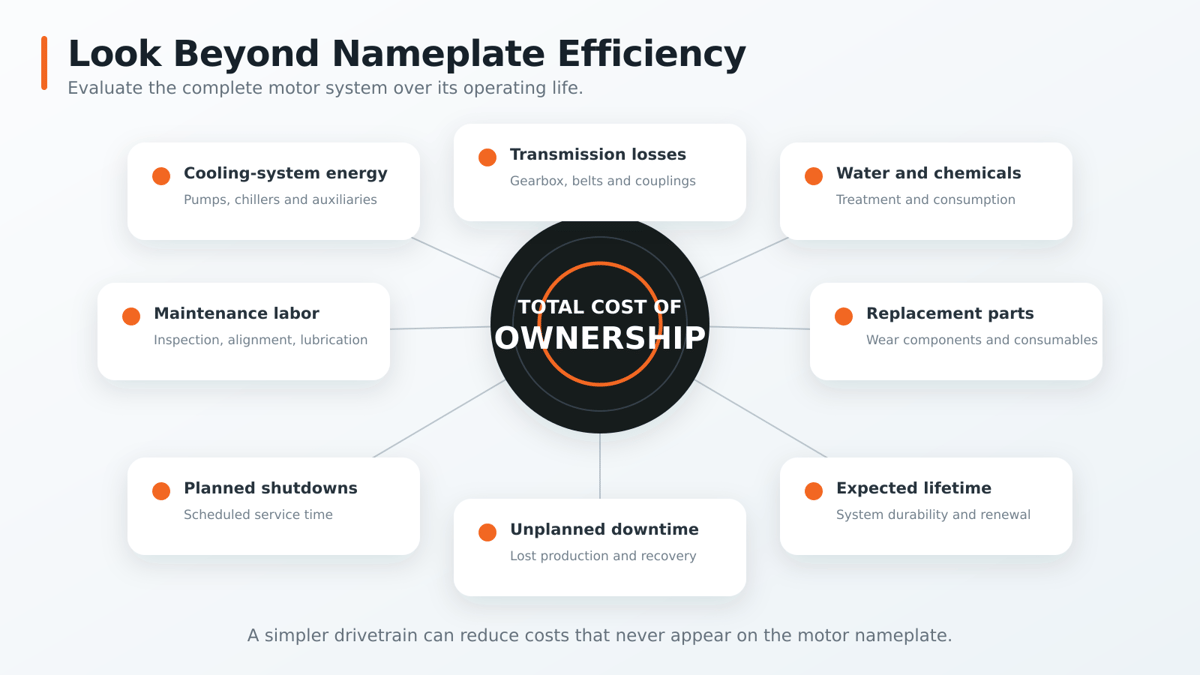
Redüktör, soğutma ekipmanı ve ömür boyu bakım gereksinimleri dahil edildiğinde, düşük maliyetli görünen bir motor daha pahalı çözüme dönüşebilir.
Bu nedenle motor teknolojileri, yalnızca satın alma fiyatı veya etiket verimi ile değil, toplam sahip olma maliyeti kullanılarak karşılaştırılmalıdır.
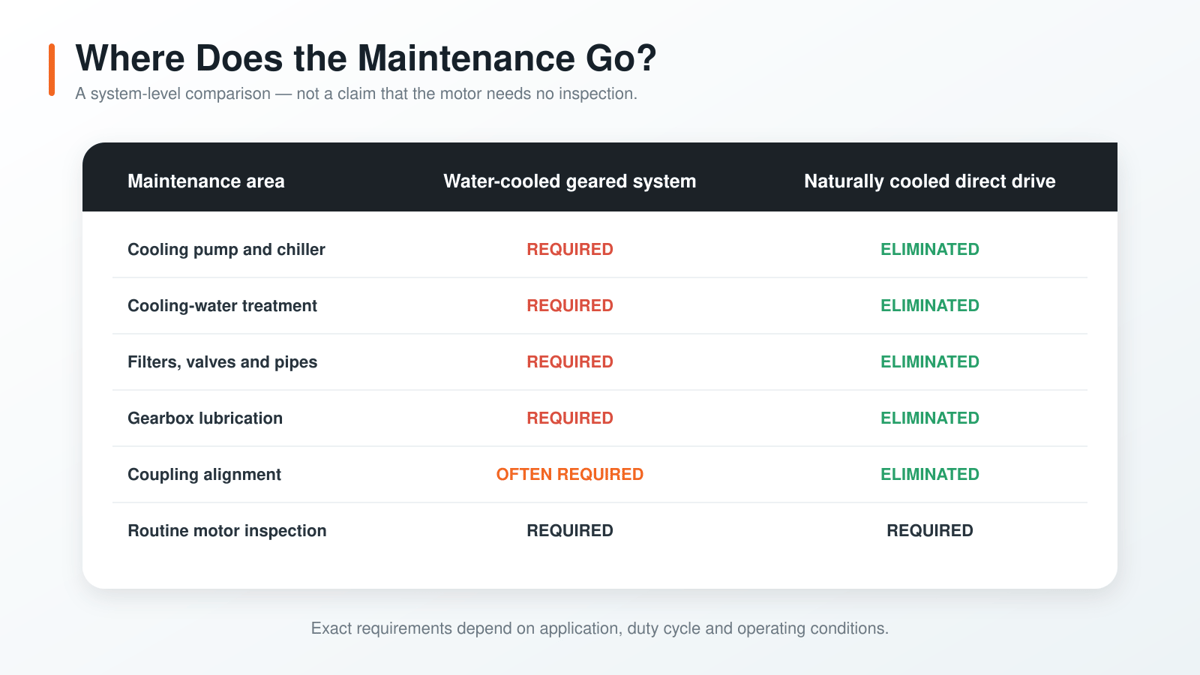
Su Soğutmalı Redüktörlü Motor ile Doğal Soğutmalı Direct Drive Karşılaştırması
Kesin konfigürasyon her zaman uygulamaya bağlıdır. Ancak gereksiz bileşenlerin kaldırılması, temelde daha basit bir tahrik sistemi oluşturur.
Direct Drive Motor Gerçekten Bakım Gerektirmeyen Bir Çözüm mü?
Hiçbir endüstriyel motor, servis ömrü boyunca kesinlikle hiçbir denetim gerektirmediği şeklinde tanımlanmamalıdır.
EMF SQM serisi için daha doğru bir tanım şudur: "Rutin su soğutma sistemi bakımı gerektirmez ve tahrik sistemi bakımı önemli ölçüde azalır."
Rulmanlar, elektrik bağlantıları, montaj noktaları ve çalışma sıcaklıkları, çalışma koşullarına, çalışma çevrimine ve üreticinin önerilerine göre yine de kontrol edilmelidir.
Amaç bakımı göz ardı etmek değildir. Amaç, gereksiz bakım işi yaratan bileşenleri tasarımdan çıkarmaktır.
Daha Basit Bir Yaklaşım: EMF SQM Tork Motorları
EMF Motor'un SQM Direct Drive Tork Motor Serisi, düşük hızda yüksek tork ile doğal konveksiyon soğutmayı birleştirir.
SQM serisi, belirtilen çalışma sınırları içinde harici bir su soğutma devresi gerektirmez. Uygulamanın tahrik edilen makineye doğrudan bağlantıya izin verdiği durumlarda, redüktörü ve ilişkili aktarma bileşenlerini de ortadan kaldırabilir.
Bu, makine üreticilerine ve endüstriyel tesislere şu konularda yardımcı olabilir:
- Tahrik sistemi karmaşıklığını azaltma
- Soğutma sistemi bakımını ortadan kaldırma
- Yardımcı enerji tüketimini azaltma
- Su ve kimyasal kullanımını azaltma
- Mekanik aşınma noktalarını en aza indirme
- Operasyonel güvenilirliği artırma
- Toplam sahip olma maliyetini azaltma
En büyük fırsat, karmaşık bir tahrik sistemi etrafındaki bakım programını iyileştirmek olmayabilir. Bu fırsat, öncelikle bakım gerektiren bileşenleri ortadan kaldırmak olabilir.
Uygulamanız Redüktörsüz veya Su Soğutma Devresi Olmadan Çalışabilir mi?
Gerekli tork, hız, çalışma çevrimi, montaj düzeni ve ortam koşullarınızı EMF Motor ile paylaşın. Mühendislik ekibimiz, doğal soğutmalı bir direct drive çözümünün makineniz için uygun olup olmadığını değerlendirecektir.
Uygulama Değerlendirmesi Talep Edin →
Sıkça Sorulan Sorular
Tork motorları su soğutması gerektirir mi?
Her tork motoru su soğutması gerektirmez. Gerekli soğutma yöntemi tork yoğunluğuna, çalışma hızına, çalışma çevrimine, ortam sıcaklığına ve motor tasarımına bağlıdır. EMF SQM tork motorları doğal konveksiyon kullanır ve belirtilen çalışma limitleri dahilinde harici bir su soğutma devresi gerektirmez.
Doğal soğutmalı bir motorun avantajları nelerdir?
Doğal soğutmalı bir motor, soğutma pompalarını, chiller'ları, filtreleri, boruları, su arıtma ve akış kontrol ekipmanlarını ortadan kaldırabilir. Bu, yardımcı enerji tüketimini, bakım gereksinimlerini ve genel sistem karmaşıklığını azaltır.
Direct drive motor bakımını nasıl azaltır?
Bir direct drive motor, tahrik edilen makineye doğrudan bağlanır. Uygulamaya bağlı olarak bu, yağlama, hizalama, muayene veya değişim gerektiren redüktörleri, kaplinleri, kayışları, kasnakları ve ek şaftları ortadan kaldırabilir.
Direct drive motorlar bakım gerektirmez mi?
Direct drive motorlar bakım gereksinimlerini önemli ölçüde azaltabilir, ancak tamamen muayene gerektirmeyen motorlar olarak değerlendirilmemelidir. Rulmanlar, elektrik bağlantıları, montaj noktaları, sıcaklık ve çalışma koşulları üreticinin önerilerine göre yine de kontrol edilmelidir.
Motor yaşam döngüsü maliyetleri nasıl hesaplanmalıdır?
Motor yaşam döngüsü maliyeti hesaplamaları satın alma fiyatını, enerji tüketimini, soğutma ekipmanını, redüktör kayıplarını, su tüketimini, bakım işçiliğini, yedek parçaları, planlı duruşları ve plansız duruş sürelerini içermelidir.
Bir direct drive motor her redüktörlü motorun yerini alabilir mi?
Hayır. Uygunluk, gereken tork, hız, çalışma çevrimi, mevcut kurulum alanı, yük karakteristikleri, montaj düzeni ve çevresel koşullara bağlıdır. Her uygulama ayrı ayrı değerlendirilmelidir.